Hiththetiya Rajamaha Viharaya

Hiththetiya Rajamaha Viharaya Hiththetiya Rajamaha Viharaya Hiththetiya Rajamaha Viharaya
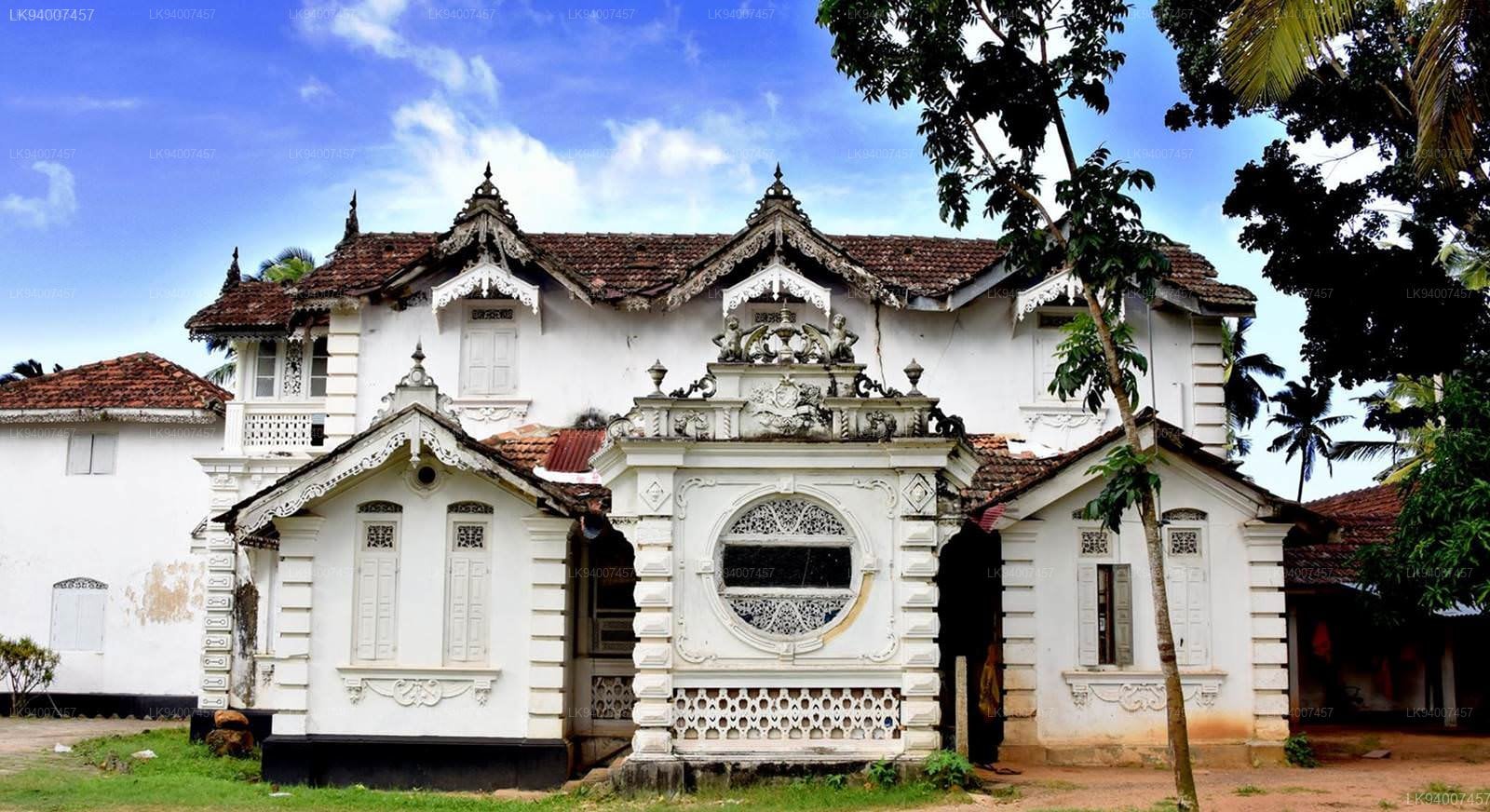
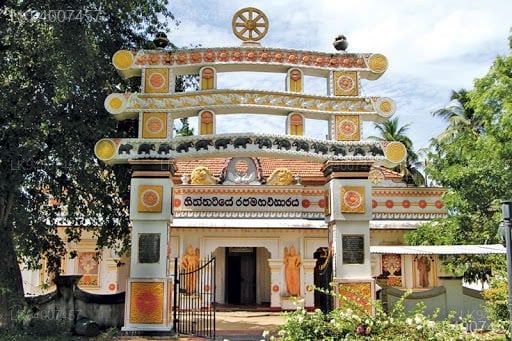
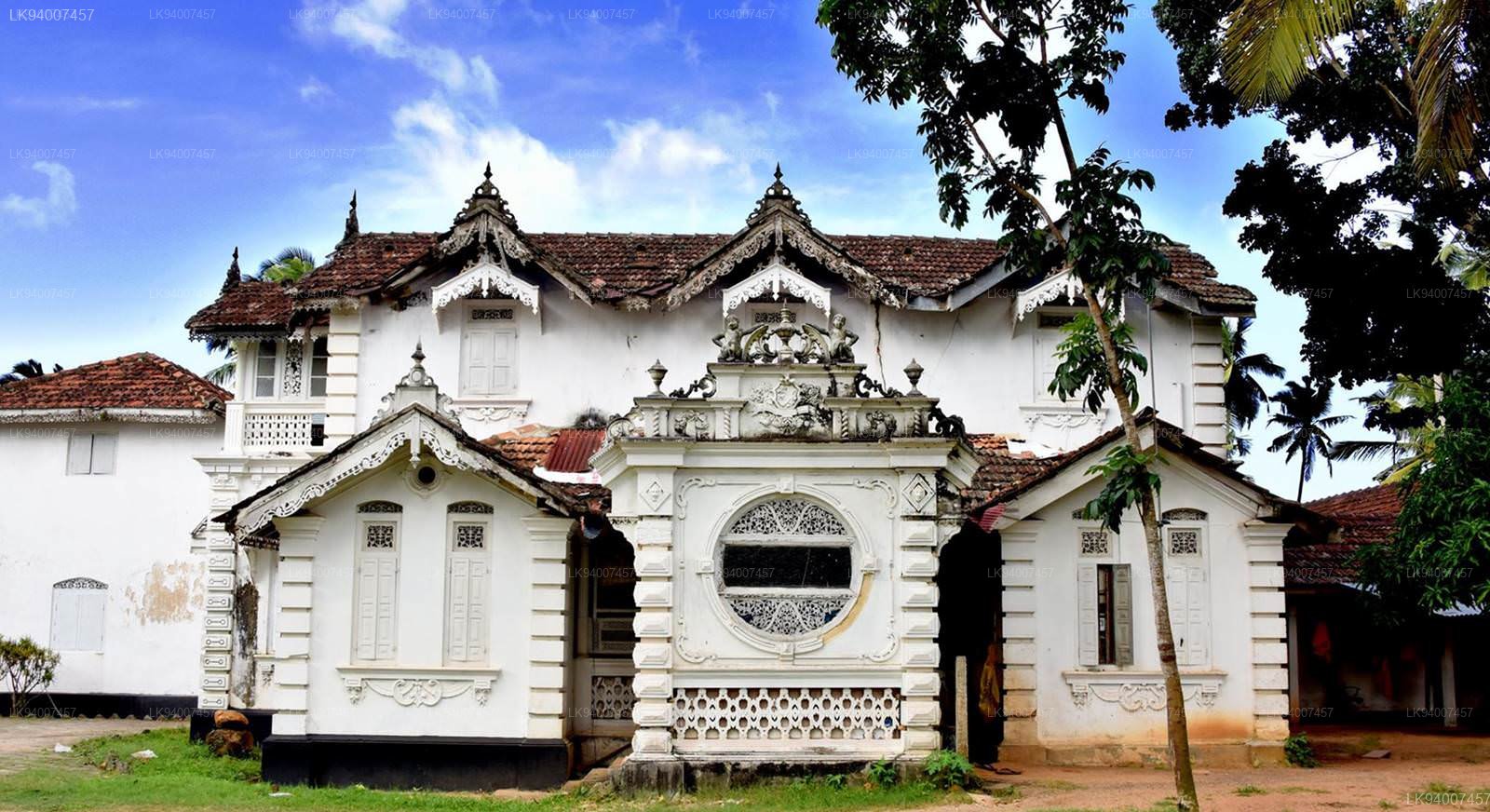
Matara Hiththatiya Rajamaha Viharaya is an ancient Temple lying very close to Matara town. The beginning of the temple is unknown, but the Bo Tree at the temple is believed to be over 1000 years old. This temple has been revived in the 18th century with the resurgence of Buddhist philosophy by Weliwita Sri Saranankara Sangaraja Thero (1698 – 1778). King Kirthi Sri Rajasinhe (1747 – 1781) has also promoted development of this temple and even today, a pair of large elephant tusks donated by the king can be found at the temple. One tusk is 7 feet in length and the other 5 feet.

The seated Buddha statue at the current image house has been salvaged from the Tampita Viharaya. This statue also known as the Sandun Pilimaya or the Sandalwood Statue is thought to be carved out of sandalwood and plastered with lime and then painted. This 3 1/2 feet tall statue with its Siraspatha is thought to be commissioned by either Weliwita Sri Saranankara Sangaraja Thero or by his student Welivitiye Sangarakkitha Thero.

In addition, an 18 riyan reclining Buddha statue flanked by Sariputta and Moggalana Theros can be seen in this image house. The current murals on the inner and outer wall of the image house has been done in 1862. The temple also owns a wooden Pirith Mandapaya built in 1842. The carvings on this structure is considered as an excellent example of the southern art form during the Kandyan era.


Hiththetiya Rajamaha Viharaya Hiththetiya Rajamaha Viharaya Hiththetiya Rajamaha Viharaya
?Text by Lakpura™. Images by Google, copyright(s) reserved by original authors.?

À propos du district de Matara

Le district de Matara, situé dans la province du Sud du Sri Lanka, est réputé pour la beauté de son littoral, la richesse de son histoire et le dynamisme de sa culture locale. Bordé par l'océan Indien, il abrite de superbes plages comme Polhena et Mirissa, prisées pour la baignade et l'observation des baleines. L'économie du district repose sur l'agriculture, notamment la culture de la noix de coco et du thé, ainsi que sur la pêche. Des sites historiques tels que le fort de Matara et le phare de Dondra Head témoignent du passé colonial de la région. Grâce à son mélange d'attraits naturels et de patrimoine culturel, le district de Matara est une destination captivante pour les locaux comme pour les touristes.

À propos de la province du Sud

La province du Sud du Sri Lanka est une petite région géographique comprenant les districts de Galle, Matara et Hambantota. L'agriculture de subsistance et la pêche constituent la principale source de revenus pour la grande majorité des habitants de cette région.

Parmi les sites importants de la province du Sud figurent les sanctuaires fauniques des parcs nationaux de Yala et d'Udawalawe, la ville sainte de Kataragama et les anciennes cités de Tissamaharama, Kirinda et Galle. (Bien que Galle soit une ville ancienne, il ne reste presque rien d'avant l'invasion portugaise.) Durant la période portugaise, deux célèbres poètes cinghalais, Andare, originaire de Dickwella, et Gajaman Nona, originaire de Denipitiya dans le district de Matara, composaient des poèmes sur le peuple.